Guillaume Lettre, Ph.D.

Guillaume Lettre is a professor of medicine at the Université de Montréal and a principal investigator at the Montreal Heart Institute. He holds the Canada Research Chair in Complex Trait Genetics and is an elected member of the College of the Royal Society of Canada.
In December 2008, he completed 3.5 years of postdoctoral training in the lab of Joel N. Hirschhorn at the Broad Institute and Children’s Hospital Boston working on the genetics of complex human traits using genome-wide association studies. Guillaume obtained his BSc in Biology from the Université de Sherbrooke (2000) and his MSc in Biological Sciences from Cold Spring Harbor Laboratory (2001). In 2005, he completed his PhD in Developmental Genetics at the University of Zurich. Beside genetics, Guillaume likes running, ice hockey and old red Bordeaux.
Staff

Ken Sin Lo
Ken Sin Lo joined the group in March 2009 as lead bioinformatician. He oversees computational work in the lab, manages the big data and acts as webmaster.
Ken Sin previously worked at the CHUL Research Center in proteomics. He holds a BSc in computer sciences from the Université de Sherbrooke, Canada, and completed a DESS (advanced graduate diploma) degree in bioinformatics at the Université du Québec à Montréal, Canada, in 2005. He is most passionate about aquascaping and adventurous exploration, both virtual and in real.

Hicham Belhaj, M.Sc.
Hicham Belhaj joined Dr. Guillaume Lettre’s laboratory in November 2021 as a research assistant. He works jointly with members of the laboratory to identify, among thousands of genes, those involved in hypertension and endothelial dysfunction by CRISPR/Cas9 screen. Hicham obtained a bachelor’s and a master’s degree in molecular and cellular biology at the University of Montreal. During his master’s degree, he became interested in the molecular mechanisms of the last step in cell division, cytokinesis. In particular, he was interested in a protein known to be overexpressed in various cancers: anillin.
Students

Pegah Hejazi, M.Sc.
Pegah Hejazi joined Dr. Lettre’s lab in January 2022 as a PhD student. She is working on single cell methods to study cardiovascular diseases. Precisely, she is interested in transcriptomic and epigenetic of cellular senescence in cardiovascular dysfunction.
Pegah has finished her Masters in Biotechnology. During that time she was involved in cancer research and drug discovery.

Rose Laflamme
Rose started her PhD in bioinformatics in Dr Lettre’s lab in the fall semester of 2023. She obtained her bachelor in bioinformatics at the Université de Montréal in spring 2022. Rose discovered the lab and its team when she did a summer internship in 2021, working on transcriptomics changes caused by the aging of vascular endothelial cells. For her PhD, she uses pangenomic approaches to study the genetic of complex diseases in the CARTaGENE cohort.

Jennifer Zevounou
Jennifer Zevounou joined Dr. Guillaume Lettre’s laboratory in the fall of 2023 as a master’s student in Biomedical Sciences, after obtaining her bachelor’s degree in Life Sciences/Bioinformatics in June 2023 at the University of Paris Cité. She is interested in genetic variants affecting endothelial function and associated with the development of cardio- and cerebro-vascular diseases.

Arnaud Chignon, Ph.D.
After completing a PhD that combined both wet and dry lab work in genetics and 2D/3D epigenetics of complex traits, Arnaud Chignon joined the Lettre lab as a postdoc. There, he develops causal inference methods using proteomic data to aid in drug discovery for diseases such as cardiovascular disorders and sickle cell disease. Outside the lab, Arnaud enjoys running and exploring the beautiful landscapes of Canada!

Meisam Yousefi, Ph.D.
Meisam joined the group as a postdoctoral researcher in 2025, after a PhD in Virology at Duke-NUS Medical School in Singapore. Having transitioned from wet-lab research to bioinformatics, he now utilizes biobank-scale genomics data in the Lettre lab to investigate genetic variants associated with cardiovascular diseases. His research interest is in integration of functional genomics techniques with genetic association studies to gain a deeper understanding of the biological mechanisms underlying complex human traits.

Malie Enault
Malie Enault joined the lab in 2025 to pursue a Master in Biomedical Sciences, under the supervision of Dr. Rafik Tadros and the co-supervision of Dr. Lettre. She obtained her Bachelor of Biomedical Sciences from Université Laval in 2025, during which she developed a particular interest in cardiac electrophysiology and genetics in cardiometabolic health. Her Master’s project aims to explore the impact of traditional cardiometabolic traits on hypertrophic cardiomyopathy by combining genetic and clinical approaches. Outside the lab, Malie is an avid runner and a passionate foodie.
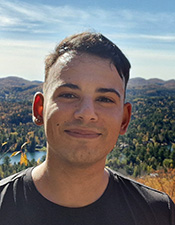
Hamid Hachemi, Ph.D.
Hamid Hachemi joined Dr. Lettre’s lab as a post-doctoral fellow in August 2026. He is working on integrating multi-omics data with artificial intelligence and advanced statistical methods to predict cerebrovascular complications in patients with sickle cell disease, with the goal of developing precision medicine approaches to optimize chronic blood transfusion strategies. Hamid completed his PhD at the French Alternative Energies and Atomic Energy Commission (CEA), where he developed machine learning algorithms to predict treatment responses in patients with cystic fibrosis.
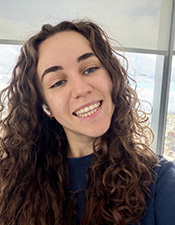
Arianne van der Schaaf
Arianne van der Schaaf first discovered Dr. Lettre’s lab in the summer of 2025 during a research internship on genetic variants influencing VO2max. After completing her bachelor’s degree in bioinformatics at Université de Montréal in 2026, she returned to the team for her master’s. She continues this work by seeking to identify genetic and proteomic biomarkers associated with responses to physical and cognitive training. Driven by her interest in exercise physiology and cardiovascular health, she took up running and eventually triathlon.

Aya Brazi
Aya Brazi joined Dr. Guillaume Lettre’s lab in the fall of 2026 to pursue a master’s degree in bioinformatics after earning her bachelor’s degree from Université de Montréal. Supervised by Dr. Nadia Bouabdallaoui (CHUM) and co-supervised by Dr. Guillaume Lettre, her research investigates sex differences in the inflammatory profiles of men and postmenopausal women diagnosed with heart failure with preserved ejection fraction (HFpEF) through the analysis of proteomic and transcriptomic data.
Social



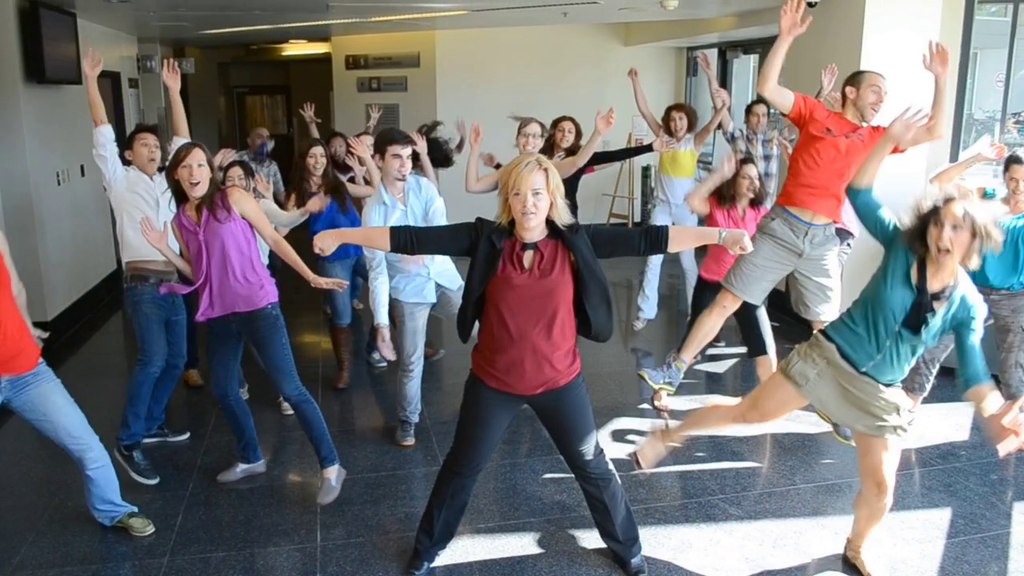
Lipsync
Stronger et al. 2013


Alumni